Weather Station

Compact Weather Station

3S-AT-WS&D- 3S-RH&AT-WS&D

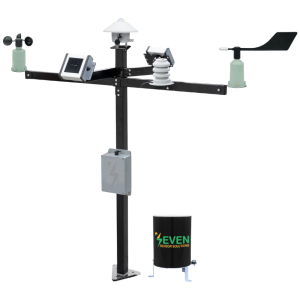
SEVEN Mini Weather Station is a solution specially designed to meet the requirements of PV facility monitoring systems. It is easy to install and durable under field conditions.

3S-CWS

The Compact Weather Station is an all-in-one, professional-grade sensor unit that combines multiple environmental measurements into one compact housing. Instead of installing separate sensors for wind, temperature, humidity, and pressure, this integrated device delivers a complete dataset through a single Modbus RTU output over RS485.

Ambient Temperature Sensor

3S-AT-PT1000

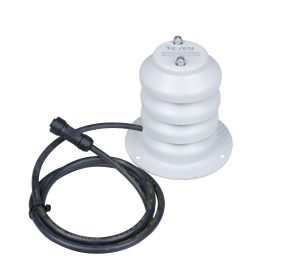
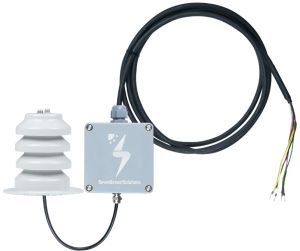
Ambient Temperature Sensor measures the air temperature in the environment where the PVs are placed in degrees Celsius (°C) by using by using a PT1000 probe. This Ambient Temperature Sensor Model is compatible with all Dataloggers and PLCs with RS485 input port. It is supplied with mounting facility, and protected from direct sunlight & radiations by a plastic radiation shield with four aspirated plates that allow the air to pass freely.

Huawei

Huawei Weather Station

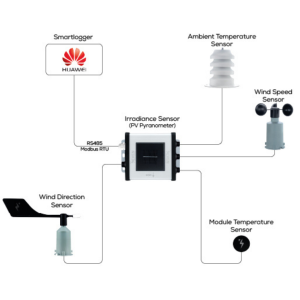
SEVEN provides a full set of weather station for Solar Power Plants compatible with all models of Huawei Smartloggers. It includes different sensors required to monitor the Solar PV Plant using the Huawei monitoring systems; Enspire, and Neteco or FusionSolar. SEVEN Sensor is working as solution partner for Huawei distributors. In fact, the compatibility of our sensors with Huawei Smartloggers have been approved by the Huawei headquarter.

Category: 
 

Humidity Sensors

3S-RH&AT&PS

The 3S-RH&AT&PS sensor from SEVEN is a professional-grade meteorological sensor designed for environmental and industrial applications, including PV plants. It measures relative humidity, ambient temperature, and pressure with high accuracy and reliability.
Category: 

3S-RH&AT&PS – Relative Humidity, Ambient Temperature, and Pressure Sensor

The 3S-RH&AT&PS sensor is part of SEVEN’s professional meteorological sensor range, designed for environmental and industrial applications, including PV plant monitoring. It measures relative humidity, ambient temperature, and atmospheric pressure with high accuracy. The sensor comes with a UV-resistant protective shield and supports both analog and digital output, making it easy to integrate with data loggers, monitoring systems, or SEVEN sensor boxes.

Category: 

Irradiance Sensors

3S-IS-LR

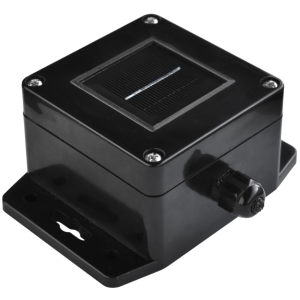
The 3S-IS-LR is a cost-effective irradiance sensor designed for residential, rooftop, and small-scale PV plants. It measures solar irradiance (W/m²) using a monocrystalline photovoltaic reference cell and communicates data via Modbus RTU (RS485), enabling performance ratio calculations for small PV systems.

3S-2IS

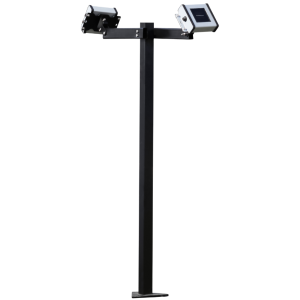
This Irradiance Sensor Model’s designation is 3S-2IS. It is specially developed to calculate the Performance Ratio (PR) for the dual orientation PV plants, as it calculates the average irradiance value as per the number of panels in each direction. Installation directions of panels in PV power plants and the number of panels in these directions may be different. The user will be able to set the number of panels in each orientation for the correct calculations. 3S-2IS special design allows simultaneous connection of two Irradiance Sensors, two Module Temperature Sensors, an Ambient Temperature Sensor, and a Wind Speed Sensor. The number of panels in both directions, to which the sensors are connected, is entered into the electronic card via 3S-2IS Configuration Interface. The total effective irradiance and total effective module temperature can be calculated and communicated to the datalogger via Modbus RTU protocol. By using these values, the accurate Performance Ratio can be calculated in the monitoring systems.

3S-4IS

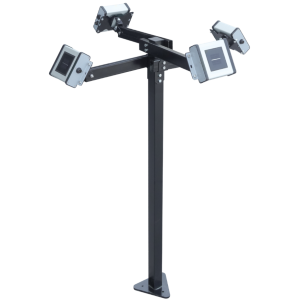
This Irradiance Sensor Model’s designation is 3S-4IS. It is specially developed to calculate the Performance Ratio (PR) for the PV plants with three or four orientations, as it calculates the average irradiance value as per the number of panels in each direction. The user will be able to set the number of panels in each orientation for the correct calculations. The special design of the electronic box used allows simultaneous connection of up to four Irradiance Sensors, up to four Module Temperature Sensors, an Ambient Temperature Sensor, a Wind Speed Sensor, and a Wind Direction Sensor. The number of panels in different directions, to which the sensors are connected, is entered into the electronic box via 3S-4IS Configuration Tool. The total effective irradiance and total effective module temperature can be calculated and communicated to the datalogger via Modbus RTU protocol. By using these values, the accurate Performance Ratio can be calculated in the monitoring systems.

3S-IS

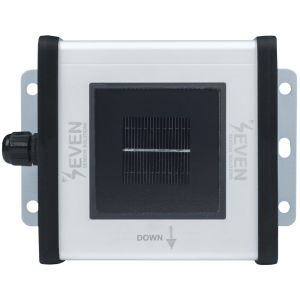
The 3S-IS Irradiance Sensor is designed for solar PV plants that require accurate irradiance and cell temperature measurement with Modbus RTU communication. Delivered with a mounting bracket and cable, this UV-protected, plug-and-run sensor integrates easily into existing PLC, SCADA, or datalogger systems via RS485.

Module Temperature Sensors

3S-MT-PT1000

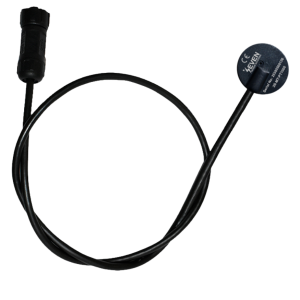
Module temperature sensor measures the back of the solar panels temperature in degrees Celsius (°C) by using a PT1000 probe. The probe, used to measure the Back of Module Temperature, is placed between two Backsheet with EVA sheets. This Module Temperature Sensor is compatible with SEVEN Irradiance Sensor Box.

PT1000-MB Converter

3S-MC-M-PT1000

The Multi PT1000 Modbus Converter is part of the SEVEN product range, which includes professional and intelligent measuring devices for environmental and industrial applications such as PV plants.

Rain Gauge Sensor

3S-RG

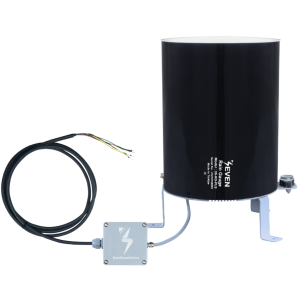
SEVEN Rain Gauge is designed to accurately measure the rainfall with a collection area of 200 cm² using the reed relay with the principle of tipping buckets. The sensor housing is made of seawater resistant anodized aluminum, making it extremely durable and resistant. The measured value can be transmitted to monitoring instruments, dataloggers and other receiving units via the serial RS485 interface with Modbus RTU protocol.

Seven Cloud Sensor

3S-CS-MB

As part of Seven Sensor Solutions’ ongoing commitment to innovation and development, a new innovative sensor has been launched! Seven Cloud system (3S-CS-MB).

While heavy cloud cover can significantly reduce solar panel power production. Studies have observed up to a 66.75% decrease in power output under dense cloud conditions compared to clear skies, which makes the cloud a vital parameter that affects the efficiency of the PV panels; thus, we developed our cloud sensor mainly to measure the Cloud Ratio.


SEVEN Sensor Box

3S-CS-MB

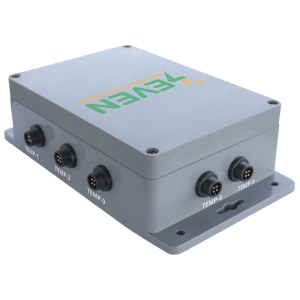
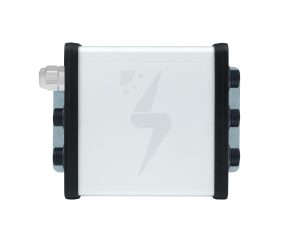
SEVEN Sensor Box is an UV protected aluminum box, including an electronic card where 6 different sensors can be connected and has an RS485 port output to transfer data in Modbus RTU protocol to the datalogger or Scada system. SEVEN provides Sunspec options for needed devices, also.

Category: 

Snow Sensor

3S-SS-MB

SEVEN Snow Sensor is designed to measure the loss in energy production caused by snowfall on photovoltaic modules. Suitable for both ground and rooftop projects, the snow sensor notifies the user of production losses due to snowfall. If the snow ratio read from the sensor is 10%, it means that there is 10% energy loss in the facility.
Category: 

Soiling Sensors

3S-SMS

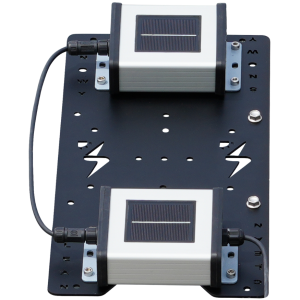
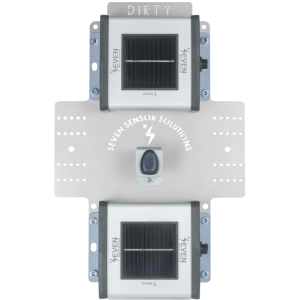
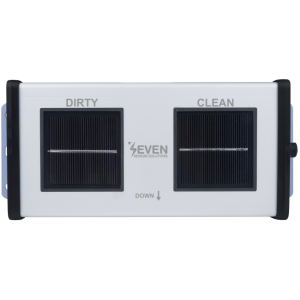
SEVEN Soiling Sensor is designed to measure the loss of energy production due to soiling caused by environmental factors on photovoltaic panels. The Soiling sensor, which is suitable for commercial, utility, industrial and rooftop projects, notifies the user of production losses due to soiling. If soiling ratio read from the sensor is 10%, it means that there is 10% energy loss in the facility.

Category: 

3S-SMS-MB-M

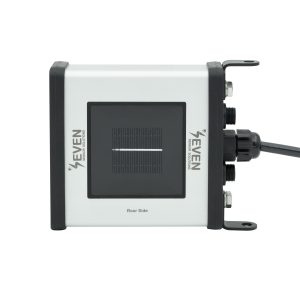
The SEVEN Soiling Sensor is designed to accurately measure energy losses caused by dust, dirt, and other environmental factors on photovoltaic (PV) panels. By monitoring the soiling level, operators can directly see how much production is being lost. For example, if the sensor reports a 10% soiling level, it means the PV system is experiencing a 10% energy loss (PV Soiling = Energy Loss). The measured soiling data is transmitted to data loggers and receiver units via a 3-wire RS485 bus using the Modbus RTU protocol.
Category: 

3S-SMS-P

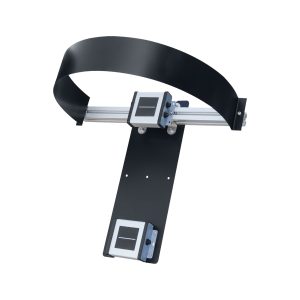
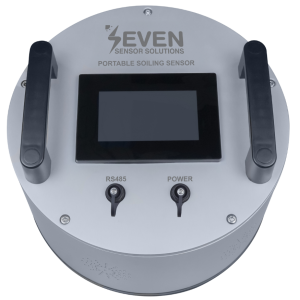
The Portable Soiling Sensor is an innovative product developed by SEVEN Sensor, based on patented technology designed specifically for measuring on-site soiling levels on solar panels in PV (photovoltaic) systems. This sensor accurately measures the amount of soiling on solar panels, helping to optimize the efficiency of solar power plants. With its compact and durable design, the sensor combines cutting-edge optical technology and advanced electronics to deliver precise and reliable soiling level measurements.
Category: 

Solar Radiation & Temperature Measurement Sensor

3S-ALBEDO

The PV Albedometer is designed to measure both plane of array (POA) irradiance and reflected irradiance, providing accurate solar albedo ratio data for bifacial PV systems. It also includes an internal cell temperature sensor, and each unit comes with a mounting bracket and cable for easy installation.

Thermopile Pyranometers

3S-TP-MB-A

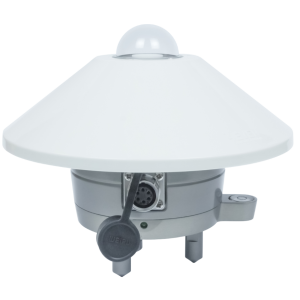
The 3S-TP-MB-A Thermopile Pyranometer is a sensor used to measure solar radiation in units of W/m². It is designed for high-precision solar energy monitoring and meets the ISO 9060:2018 Class A and IEC 61724-1:2021 Class A standards. With advanced thermopile detector and diffuser technology, this pyranometer provides stable and accurate irradiance measurements, making it perfect for solar, meteorological, and agricultural applications. It offers low zero-offset behavior and exceptional stability, ensuring accurate solar irradiance measurements.

Ultrasonic Wind Speed Sensor

Ultrasonic Anemometer

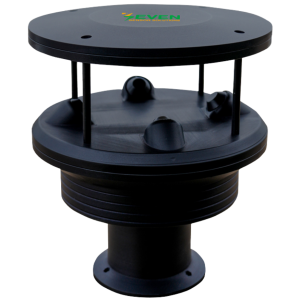
It is a two-axis static ultrasonic anemometer used for accurate measurements of Wind Speed and Direction in all environmental conditions. It is Capable of measuring wind speed up to 85 m/s without giving up.

Heating option is available, for quick defrosting. A model with anodized aluminum alloy case with anti-corrosion coating is available. This feature makes it possible to be used the instrument even in particularly aggressive environments. The anemometer meets the requirements of MIL-STD-810G Method 509.6 (salt spray corrosion test). High immunity to electromagnetic interference makes it suitable for measurements in electrically noisy environments.


Wind Direction Sensor Aluminum

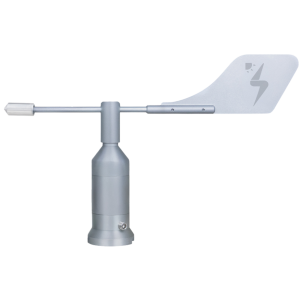
3S-WD-Aluminum

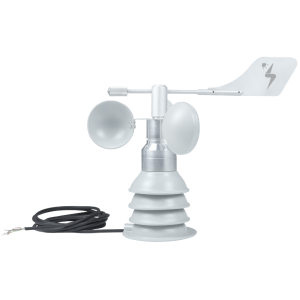
The SEVEN 3S-WD Wind Direction Sensor is a professional-grade instrument designed for accurate measurement of wind direction in environmental and industrial applications, including PV plants. It uses a vane-driven Hall Effect position sensor, which detects changes in wind direction through magnetic field influence and converts them into reliable analog or digital output signals.

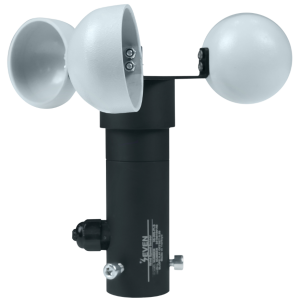
3S-WS-Aluminum

The SEVEN 3S-WS Wind Speed Sensor is a professional anemometer designed for accurate measurement of horizontal wind speed in environmental and industrial applications, particularly PV power plants. The sensor converts wind speed into an electrical signal in meters per second (m/s) using a cup-star anemometer with a reed switch or optional Modbus RTU/4–20 mA outputs.

Built for durability, the sensor features seawater-resistant anodized aluminum or UV-resistant ASA housings, making it suitable for harsh outdoor conditions. Optional heated models prevent icing, ensuring reliable performance in cold climates. The sensor can easily connect to SEVEN Irradiance Sensors, Sensor Boxes, and compatible data loggers.

Wind Direction Sensor Plastic

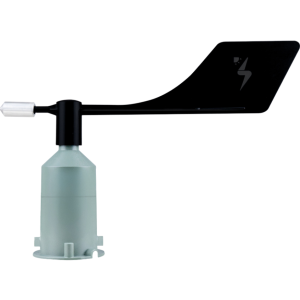
3S-WD-Plastic

The SEVEN 3S-WD Wind Direction Sensor is a professional-grade instrument designed for accurate measurement of wind direction in environmental and industrial applications, including PV plants. It uses a vane-driven Hall Effect position sensor, which detects changes in wind direction through magnetic field influence and converts them into reliable analog or digital output signals.

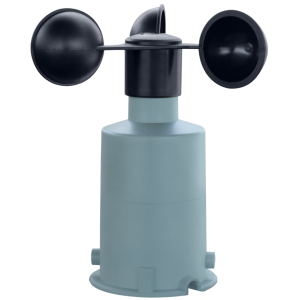
3S-WS-Plastic

The SEVEN 3S-WS Wind Speed Sensor is a professional anemometer designed for accurate measurement of horizontal wind speed in environmental and industrial applications, particularly PV power plants. The sensor converts wind speed into an electrical signal in meters per second (m/s) using a cup-star anemometer with a reed switch or optional Modbus RTU/4–20 mA outputs.

Built for durability, the sensor features seawater-resistant anodized aluminum or UV-resistant ASA housings, making it suitable for harsh outdoor conditions. Optional heated models prevent icing, ensuring reliable performance in cold climates. The sensor can easily connect to SEVEN Irradiance Sensors, Sensor Boxes, and compatible data loggers.